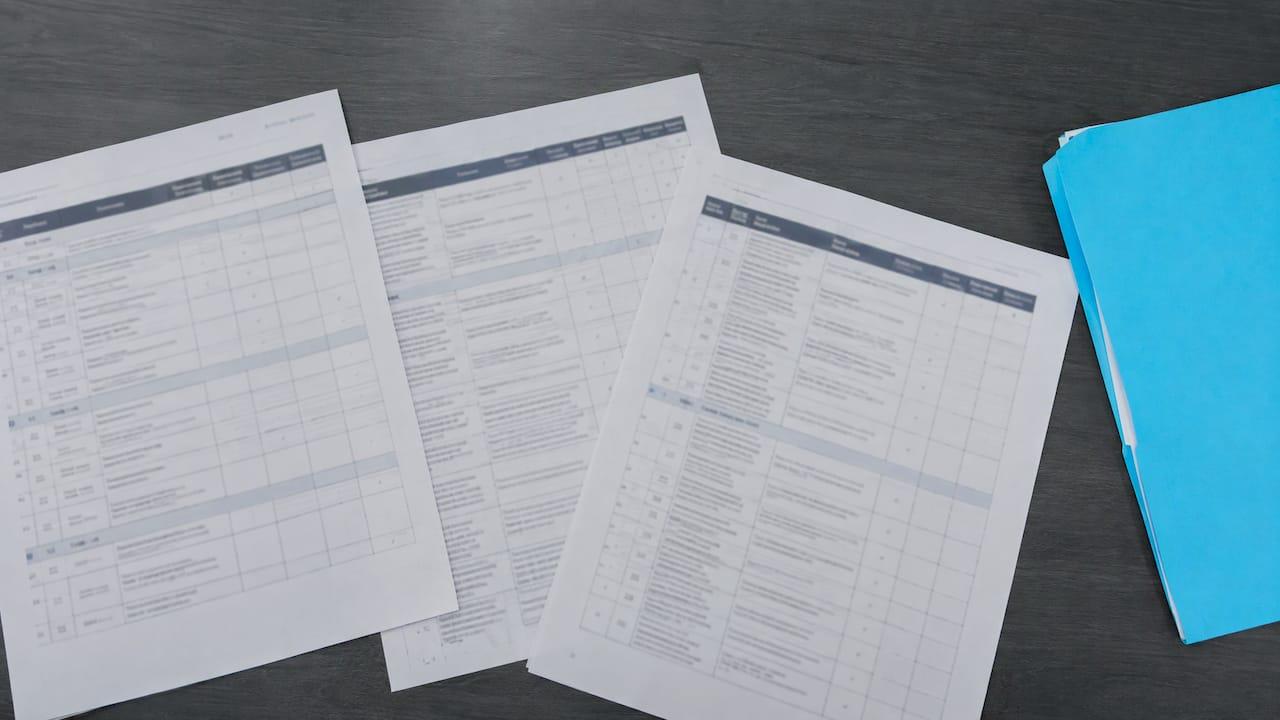
The ISO 27001 Statement of Applicability (SoA) is the one document that lists every control your information security management system (ISMS) needs, says why, says whether it is in place, and explains why any Annex A control was left out. Auditors start from it. If it is thin, inconsistent with your risk assessment or out of date, the audit goes badly. Below you get the required content, a sample row, the rules for exclusions, the build sequence and what auditors check. If your team would rather not carry the whole exercise alone, Nexus runs ISO 27001 compliance assessments alongside the security and IT work that produces the evidence.
TL;DR
- The SoA is required by Clause 6.1.3(d) of ISO 27001. It must list the necessary controls, why they are included, whether they are implemented, and why Annex A controls are excluded.
- Build it after your risk assessment and risk treatment plan, never before. The SoA records decisions; it does not make them.
- "Too expensive" or "no incident so far" are not valid reasons to exclude a control. "We do not develop software" can be.
- Every row needs a justification and a pointer to evidence. HR, legal, facilities and leadership must contribute, not only IT.
- Treat it as a living document: review it when scope changes, when a control fails, and at least once a year at management review.
Table of Contents
- What the Statement of Applicability is
- What the SoA must contain
- How to decide which controls apply
- How to build the SoA, step by step
- Who needs to be in the room
- What auditors check and how to keep it current
- Common mistakes that cause nonconformities
- ISO 27001 and US frameworks
- Getting the SoA done without a six-month detour
- Our perspective
- FAQ
- Sources
What the Statement of Applicability is
Think of the SoA as the bridge between your risk assessment and your controls. The ISO working group's auditing practices note on the SoA describes it as the place that documents all necessary controls in one location, why they are necessary, whether they are implemented, and why any Annex A reference controls are unnecessary.
Australia's Department of Employment and Workplace Relations makes a similar point in its guidance on the importance of the SoA: the document links the risk assessment, the selected controls and the implementation status of each one, and shows that you considered a comprehensive set of candidate controls.
Annex A of the 2022 edition of the standard is titled the "information security controls reference." It holds 93 controls in four themes: organizational, people, physical and technological. Our guide on why Annex A's 93 controls are not a checklist explains how to read them. The key point for the SoA is that the list is a reference to compare against, not a shopping list you must buy in full.
Two plain-language terms help here:
- ISMS: the set of policies, processes and controls you use to manage information security, with the scope you have chosen.
- Risk treatment plan: your documented decision on what to do about each risk (reduce it, avoid it, transfer it or accept it), including which controls you will use.
What the SoA must contain
The ISO note states that Clause 6.1.3(d) requires four things:
- The controls you have determined are necessary.
- The justification for including each one.
- Whether each one is implemented.
- The justification for excluding any Annex A control.
That is the minimum. Custom controls matter too. If you add a control that does not appear in Annex A because your risk assessment calls for it, it still belongs in the SoA. The same note explains that the ISO 27003 guidance calls these custom controls, while ISO 27007 uses the term "variation" for a custom control worded much like the Annex A control it replaces.
In practice, most teams build a table with one row per control. A published example helps: Databricks publishes its SoA against the ISO/IEC 27001:2022 controls, which shows how a mature organization lays the document out and how it maps controls to related standards.
A sample row
Here is a row for a software company that hosts customer data in the cloud. The wording is illustrative, not a template to copy.
| Field | Example entry |
|---|---|
| Control | 8.13 Information backup |
| Applicable | Yes |
| Justification | Risk assessment identified loss of customer data as a high risk; contractual obligation to restore within agreed timeframes |
| Justification type | Risk assessment, contractual |
| Status | Implemented |
| Evidence reference | Backup policy v2.1, restore test report, backup job configuration |
And a row for an exclusion:
| Field | Example entry |
|---|---|
| Control | 7.4 Physical security monitoring (own data centre) |
| Applicable | No |
| Justification | No on-premises servers; all systems run in a cloud provider's facilities, which are covered by supplier controls |
| Justification type | Environment-specific |
| Status | Not applicable |
| Evidence reference | Asset inventory, supplier agreement |
An implementation status column should be honest. "Implemented," "partially implemented" and "planned, with a target date" are all acceptable if they match reality. A claim of full implementation that the auditor cannot verify causes more trouble than an honest "planned."
How to decide which controls apply
Start from your risks, not from the list. You assess risks to your information, choose how to treat each one, and then decide which controls deliver that treatment. The controls can come from Annex A or from another framework or your own design. Clause 6.1.3(c) then requires you to compare your chosen controls against Annex A to make sure you have not overlooked a necessary one, according to the ISO auditing practices note.
There is no mandatory baseline. Some of the 93 will not apply to you, and that is normal.
Exclusions that hold up
A good exclusion rests on a fact about your business:
- Technology you do not use. A company that buys all its software has a reasonable case to exclude secure coding (8.28).
- Activity you do not perform. If you never run a development environment, controls on separating environments may not apply.
- Environment-specific factors. A fully cloud-based company with no office server room can justify excluding controls about physical equipment on its own premises.
Exclusions that do not
Cost, "it is not a priority" and "we have never had an incident" are not justifications. They describe your appetite for spending, not the absence of a risk. If a control is necessary to treat a risk you identified, leaving it out creates a gap between your risk treatment plan and your SoA, and that gap is what auditors look for. A control that sits in the SoA as applicable with no matching risk or business requirement behind it is the opposite problem, and it is just as visible.
The budget question
If you are a small team, the number of controls you implement is driven by your scope and your risks, not by a target count. A narrow, well-defined scope (for example, the product and the people who run it, rather than every office) keeps the SoA focused. Our article on real US ISO 27001 certification costs walks through how scope decisions affect the budget.
How to build the SoA, step by step
The sequence matters because each step feeds the next.
1. Fix the scope
Decide which parts of the organization, systems, locations and data the ISMS covers. Everything in the SoA is judged against this scope. A vague scope produces a vague SoA.
2. Define a risk assessment method and run it
Clause 6.1.2 requires a documented risk assessment method. Identify the risks to your information, rate them consistently and record who owns each. Repeat the assessment when something significant changes, such as a new cloud platform, a merger or a major customer requirement.
3. Choose treatments and write the risk treatment plan
For each risk, choose to reduce, avoid, transfer or accept it. Where you reduce a risk, name the control. This plan is what justifies most rows of your SoA. Where the work is large, our ten implementation steps for US teams shows how the plan fits into the wider project.
4. Set up the table
Use one row per control, with the columns from the sample above: control reference and name, applicable or not, justification, justification type, status and evidence reference. Add your custom controls at the end.
5. Go through every Annex A control
All 93 get a decision. For each, write the reason in a sentence a stranger could follow. "Required by risk R-14 (loss of customer data)" beats "best practice." Where you include a control, also record whether it is implemented and where the proof lives.
6. Link to evidence
Point each implemented control to a policy, procedure, configuration or record. Technical controls such as patching need artefacts from live systems; our guide to an audit-ready patch management policy shows what that looks like. Change control evidence is covered in our IT change management process guide, and development controls in the piece on the secure software development lifecycle.
7. Get it approved
Leadership approves the SoA and dates it. The version you approve is the version the certificate will refer to.
Who needs to be in the room
The SoA is not an IT document. Organizational controls (policies, roles, supplier relationships, legal and contractual requirements) belong to HR, legal, procurement and leadership. Physical controls belong to whoever manages the buildings. The DEWR guidance notes that the exercise forces you to think through implementation logistics such as new equipment, changed business procedures, extra staff and whether a control applies to every site or only to certain assets. Those decisions reach well beyond the IT team.
If only IT fills in the SoA, the organizational and people rows end up thin or optimistic, and an auditor interviewing HR or procurement will notice. Supplier controls deserve particular care; our overview of third-party cybersecurity risks is a good starting point for the supplier rows.

What auditors check and how to keep it current
In a certification audit the SoA is the auditor's map. At the second stage, the auditor samples controls from it, checks that what you selected matches the risk assessment and treatment results, and tests whether the controls actually work by observation or testing. They also expect at least one full cycle of internal audit and management review. These expectations come from the certification process; confirm the specifics with your chosen certification body.
The ISO note also says that the version of the SoA is referenced in the certification document. A change to the SoA that does not alter the coverage of controls within your certification scope does not require the certificate to be reissued. A change in coverage is different, so tell your certification body before you rely on it.
Keep the SoA current with a simple routine:
- Update it when the scope changes, such as a new product, office or cloud environment.
- Update it when a control is found not to be working, and record the corrective action.
- Review it at least once a year at management review, before surveillance audits.
- Keep old versions so you can show the history of decisions.
The SoA is only as current as your last review. A document dated a year ago that no longer matches your systems is a finding waiting to happen.
Common mistakes that cause nonconformities
- Copying a competitor's or a public SoA. Another company's decisions reflect its risks, not yours. Use public examples to see the format only.
- Marking everything "implemented" to look ready. The evidence column will contradict it.
- Excluding on cost. The exclusion is invalid, and the risk remains in your register.
- Leaving out custom controls. If your risk treatment adds a control that is not in Annex A, it must appear.
- Skipping the link to the risk treatment plan. Each included control should trace back to a risk or a requirement.
- Using the 2013 control numbering. The 2022 edition restructured Annex A, so a SoA built on the older list will not map cleanly. Work from the 2022 control set.
ISO 27001 and US frameworks
If you sell to US customers you may be asked about several frameworks at once. ISO 27001 lets you select controls based on your own risk assessment. Frameworks such as NIST SP 800-53 assign a defined control set according to system impact level. That difference is why the SoA exists in ISO 27001 and has no exact twin elsewhere. Teams that also face a SOC 2 request can reuse much of the same evidence; see our SOC 2 readiness assessment and SOC 2 gap analysis guides for how the two overlap.
Getting the SoA done without a six-month detour
For a small business, a healthcare provider or a startup, the hard part is rarely the table. It is getting a defensible risk assessment, real evidence from your systems and a consistent story across IT, security and compliance. When those sit with different vendors, the SoA turns into a negotiation between them.
Nexus offers compliance assessments covering ISO 27001, SOC 2, HIPAA and PCI-DSS, alongside managed IT, cybersecurity, cloud and data protection services under one contract and one SLA. That means the people assessing your controls work with the same unified service that runs 24/7 monitoring, backup and recovery, and encryption. You can see the full list on our services page or start from the Nexus homepage.
Our perspective
Most SoA problems we see described start before the spreadsheet. A company writes the document to satisfy a deadline, then discovers that its controls are owned by three different vendors and none of them can produce the evidence in the same format.
Our view is that a Statement of Applicability should read like an honest map of how your security actually runs. That is easier when monitoring, cloud management, backup, encryption and compliance are delivered by one provider with a single point of accountability, because the control, the owner and the evidence sit in one place.
It is also why we offer fixed monthly pricing for managed IT and cybersecurity, with compliance assessments for ISO 27001, SOC 2, HIPAA and PCI-DSS delivered by senior practitioners rather than generalists. You decide what is in scope and what is justified. We help make sure each decision is backed by something you can show.
Nick - Sr. Executive
FAQ
Is the Statement of Applicability mandatory for ISO 27001 certification?
Yes. Clause 6.1.3(d) requires you to produce a SoA as documented information. It must state the necessary controls, why they are included, whether they are implemented and why Annex A controls are excluded, as the ISO auditing practices note explains.
Do I have to implement all 93 Annex A controls?
No. You must consider all 93 and record a decision on each, but you implement the ones your risk treatment requires. Anything you exclude needs a factual justification, such as technology you do not use or an activity you do not perform.
Can I use a free ISO 27001 SoA template?
A template gives you the column layout. The content, meaning your risks, justifications and evidence, has to be your own, because the auditor tests it against your real environment. Published examples are useful for seeing the structure only.
How often should the SoA be updated?
At least once a year at management review, and whenever your scope changes or a control proves not to work. Date each approved version, since the version is referenced in your certification documents.
Does a small business need a full SoA?
Yes, the requirement is the same at any size. A smaller, tightly defined scope keeps the document manageable, and fewer systems means less evidence to gather.
Sources
- ISO/IEC JTC 1/SC 27/WG 1 auditing practices note on the Statement of Applicability
- Australia DEWR: The importance of your Statement of Applicability when implementing ISO 27001
- Databricks ISO/IEC 27001 Statement of Applicability