
Procurement is the frontline defence against third-party cyber threats, and its role in cybersecurity has never been more consequential. Global cybersecurity spending is projected to reach $240 billion in 2026, yet a significant gap persists between formal procurement policies and actual security practices. Procurement teams control the entry point for every vendor, software platform, and service provider that touches an organisation's data. That control makes procurement the most direct lever for managing enterprise cyber risk, not IT, not legal, and not compliance alone.
How does procurement influence cybersecurity through vendor selection?
Procurement's influence on cybersecurity begins before a contract is signed. Leading organisations integrate cybersecurity checks into vendor due diligence as a standard step, not an afterthought delegated to IT after the deal closes. This shift from reactive to proactive procurement is the single most effective change a procurement team can make to reduce cyber exposure.
The vendor selection process is where security posture is either validated or ignored. Procurement teams that embed standards like ISO 27001 and SOC 2 into their evaluation criteria create a measurable baseline for supplier security. Standards such as ISO 27001, SOC 2, and FedRAMP are now critical references for procurement teams embedding cybersecurity into contract negotiations. These frameworks give procurement professionals a common language to assess supplier capabilities without relying solely on vendor self-reporting.

The behavioural side of vendor selection is where most programmes fail. Informal peer networks influence 87% of vendor decisions, often bypassing formal cybersecurity evaluations entirely. That statistic reveals a structural problem: even well-designed RFP questionnaires lose their effectiveness when real decisions happen through informal channels. Procurement leaders must embed security culture into the team, not just the process.
Key criteria to embed in vendor evaluation:
- Verified ISO 27001 or SOC 2 certification, not self-declared compliance
- Evidence of third-party penetration testing within the past 12 months
- Documented incident response procedures and breach notification timelines
- Subcontractor security requirements passed down through the supply chain
- Privacy impact assessments completed before data-sharing agreements are signed
Pro Tip: Avoid satisficing behaviour in vendor selection. Choosing the first "acceptable" vendor to meet a deadline is a recognised risk pattern. Prioritise security optimisation over speed, and build minimum security thresholds into your procurement policy so the bar cannot be quietly lowered under deadline pressure.
What are the key risks procurement must manage in the digital supply chain?
Supply chain cyberattacks are the fastest-growing threat vector in enterprise security. Software vendors often carry complex subcontractor chains with opaque security postures that buyers rarely verify. A vendor can pass your initial assessment and still expose your organisation through a fourth-party provider you have never audited.
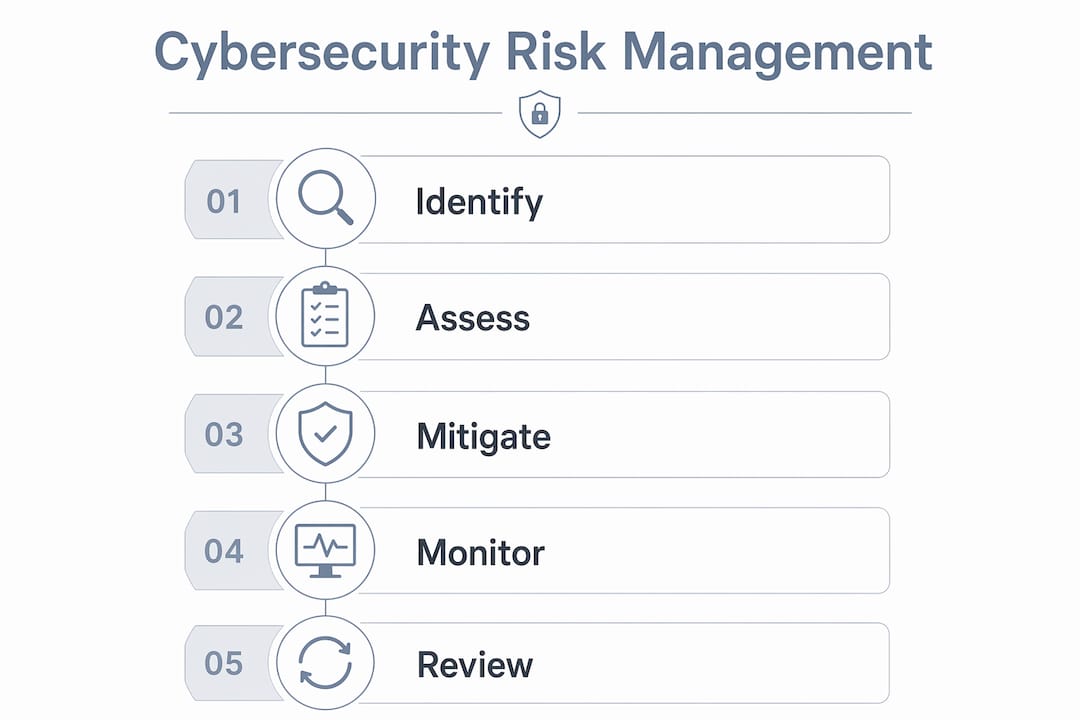
Procurement teams that treat digital vendors with less scrutiny than physical suppliers create the exact complacency that attackers exploit. Cyber events and data breaches are among the leading causes of business disruption, according to the Achilles Sustainability Survey 2026. That finding reframes procurement's mandate: protecting organisational continuity is now as central to the function as cost efficiency.
The four most common procurement-linked cyber risks are:
- Opaque subcontractor networks. A primary vendor's security controls do not automatically extend to their subcontractors. Procurement must require contractual flow-down of security requirements to all tiers.
- Vendor self-reporting gaps. Vendor-provided security documentation often masks deeper risks. External audits and third-party risk intelligence provide a more accurate picture than questionnaires alone.
- One-time vetting. Approving a vendor at onboarding and never reviewing them again is a critical failure point. Security postures change, and a vendor that was compliant two years ago may not be today.
- Scope creep in data access. Vendors frequently accumulate access to systems and data beyond their original contract scope. Procurement must enforce access boundaries through contract terms and periodic reviews.
Procurement professionals have unique visibility into supplier criticality and contract value, which positions them to prioritise which vendors warrant the deepest scrutiny. That visibility is a structural advantage that no other function in the organisation holds.
How can procurement teams build a cybersecurity risk management framework?
Effective cybersecurity risk management in procurement requires a framework, not a checklist. The foundation is supplier segmentation based on cyber risk exposure. Not every vendor warrants the same level of scrutiny. A cloud platform processing customer data demands a different assessment than a stationery supplier.
Embedding cyber risk into supplier segmentation and continuous monitoring frameworks improves procurement's ability to manage evolving threats. Segmentation allows procurement teams to allocate their due diligence resources where the risk is highest, rather than applying a uniform process that dilutes effort across low-risk and high-risk vendors alike.
Cross-functional collaboration is the second pillar. Procurement cannot manage cyber risk in isolation. A working group that includes cybersecurity, legal, compliance, and IT representatives creates the shared accountability needed to maintain vetting rigour over time. Each function brings information the others lack: legal knows contractual exposure, cybersecurity knows threat intelligence, and procurement knows supplier relationships and contract leverage.
Core elements of a practical framework:
- Supplier risk tiering. Classify vendors as critical, high, medium, or low risk based on data access, system integration depth, and contract value.
- Continuous monitoring. Move beyond point-in-time assessments. Use third-party risk intelligence platforms to track changes in vendor security posture between formal reviews.
- Contractual security obligations. Require vendors to notify you of breaches within defined timeframes, submit to periodic audits, and maintain minimum security certifications.
- Offboarding protocols. Define how vendor access is revoked and data is returned or destroyed when a contract ends.
Organisations that combine supplier-provided information with external risk intelligence reduce exposure and operational disruptions. External signals, such as dark web monitoring, breach databases, and security ratings, give procurement a real-time view that vendor questionnaires cannot provide. You can also build on an enterprise vulnerability management process to extend that rigour into your supplier risk programme.
Pro Tip: Establish a standing cross-functional working group that meets quarterly to review the highest-risk vendor tier. Quarterly reviews catch security drift before it becomes a breach. Ad hoc reviews triggered only by incidents are too slow.
What standards and best practices guide procurement's cybersecurity responsibilities?
Industry standards give procurement teams a defensible basis for their security requirements. ISO 27001 defines information security management system requirements and is widely accepted as the benchmark for supplier security assessments. SOC 2 reports provide audited evidence of a vendor's controls around security, availability, and confidentiality. FedRAMP is the U.S. federal standard for cloud service providers and is increasingly referenced by private-sector procurement teams as a credible benchmark.
Federal and industry guidelines recommend cybersecurity integration starting at procurement stages, not after contract award. That guidance reflects a broader shift: procurement is now expected to carry security requirements from the RFP stage through contract management and into ongoing supplier oversight. Elevating cyber criteria alongside cost and quality in RFPs is no longer optional for organisations operating in regulated industries.
| Standard | Primary focus | Procurement application |
|---|---|---|
| ISO 27001 | Information security management | Require certification as a vendor qualification criterion |
| SOC 2 Type II | Controls over security and availability | Request audit reports during due diligence |
| FedRAMP | Cloud service security for government | Use as a benchmark for cloud vendor assessments |
| NIST CSF | Cybersecurity risk management framework | Align supplier risk tiers to framework maturity levels |
The most effective procurement programmes treat these standards as a floor, not a ceiling. A vendor holding ISO 27001 certification still requires contract-level obligations, access controls, and periodic review. Certification confirms a baseline. It does not guarantee ongoing compliance or protection against emerging threats. Understanding how cyber threats evolve helps procurement teams ask better questions during vendor assessments and stay ahead of the threat curve.
Key takeaways
Procurement is the most direct lever for managing enterprise cyber risk, and embedding security into every stage of vendor management is the only way to close the gap between policy and practice.
| Point | Details |
|---|---|
| Procurement is the frontline | Vendor selection is where cyber risk is accepted or rejected before it reaches the organisation. |
| Satisficing increases exposure | Choosing the first acceptable vendor under deadline pressure is a documented risk pattern that procurement policy must prevent. |
| Continuous monitoring is required | One-time vendor vetting creates false confidence; security postures change and must be reviewed regularly. |
| Standards set the floor | ISO 27001, SOC 2, and FedRAMP provide a baseline, but contract-level obligations and audits are still required. |
| Cross-functional teams reduce risk | Procurement working alongside cybersecurity, legal, and compliance produces faster and better-informed vendor decisions. |
Procurement's expanding cybersecurity mandate: a frank assessment
The procurement professionals I respect most have stopped thinking of cybersecurity as IT's problem. They have accepted that every vendor contract is also a risk decision, and they act accordingly. What I find most telling is the 87% figure on informal vendor selection. That number does not surprise me. I have seen procurement teams with excellent formal frameworks make vendor decisions over a phone call with a trusted contact, completely bypassing the process they built. The framework exists on paper. The decision happened elsewhere.
The uncomfortable truth is that RFP questionnaires are largely theatre if the culture around vendor selection does not change. Formal cybersecurity questions get answered by vendors' marketing teams, not their security engineers. The real signal comes from third-party audits, external risk intelligence, and the willingness to walk away from a preferred vendor when the security evidence does not hold up.
What I have seen work is cross-functional accountability. When procurement, cybersecurity, and legal share responsibility for a vendor decision, the informal shortcuts disappear. No one wants to be the person who approved a vendor that later caused a breach. Shared accountability creates the friction that protects the organisation. Procurement leaders who build that structure are not just managing risk. They are building the kind of supplier ecosystem that holds up under pressure.
— Nick - Sr. Executive
How AccountNext-Nexus supports procurement-led cybersecurity
Procurement teams need more than frameworks. They need real-time visibility into the security posture of every vendor in their ecosystem, and that requires technology built for continuous monitoring.
AccountNext-Nexus delivers 24/7 IT and cybersecurity monitoring that gives procurement and security teams a live view of threats across their supplier environment. With real-time threat detection, cloud infrastructure management, and compliance support, AccountNext-Nexus consolidates the fragmented security signals that procurement teams cannot afford to miss. Organisations working with AccountNext-Nexus gain faster incident response and reduced operational costs, without managing multiple disconnected tools. If your procurement programme is ready to move from periodic reviews to continuous supplier risk intelligence, AccountNext-Nexus IT solutions are built for exactly that transition.
FAQ
What is the role of procurement in cybersecurity?
Procurement acts as the frontline control point for vendor cyber risk by embedding security requirements into supplier selection, contract negotiation, and ongoing oversight. Every vendor relationship approved by procurement is also a decision about acceptable cyber risk.
Why does vendor satisficing increase cybersecurity risk?
Satisficing means choosing the first acceptable vendor rather than the most secure one. This behaviour, documented in cybersecurity procurement research, increases risk exposure because speed and familiarity override formal security evaluation.
Which standards should procurement use to evaluate vendor security?
ISO 27001, SOC 2 Type II, and FedRAMP are the most widely accepted standards for vendor security assessment. Federal guidelines recommend integrating these criteria from the RFP stage through contract management.
How often should procurement review vendor cybersecurity posture?
Continuous monitoring is the current best practice, supplemented by formal reviews at least annually for high-risk vendors. One-time onboarding checks are insufficient because vendor security postures change over time.
What is the biggest gap in cybersecurity procurement processes?
The biggest gap is the disconnect between formal procurement frameworks and actual decision-making. Informal peer networks influence the majority of vendor decisions, often bypassing the cybersecurity evaluations that formal processes require.